
Information for the upcoming PSB is now available.
The Pacific Symposium on Biocomputing (PSB) 2026 was an international, multidisciplinary conference for the presentation and discussion of current research in the theory and application of computational methods in problems of biological significance. Papers and presentations were rigorously peer reviewed and were published in an archival proceedings volume. PSB 2026 was held on January 4-8, 2026 at the Fairmont Orchid on the Big Island of Hawaii, Hawaii, USA. 2026 marked the 30th year of PSB.
PSB 2026 brought together top researchers from the US, the Asian Pacific nations, and around the world to exchange research results and address open issues in all aspects of computational biology. PSB is a forum for the presentation of work in databases, algorithms, interfaces, visualization, modeling and other computational methods, as applied to biological problems, with emphasis on applications in data-rich areas of molecular biology.
The PSB has been designed to be responsive to the need for critical mass in sub-disciplines within biocomputing. For that reason, it is the only meeting whose sessions are defined dynamically each year in response to specific proposals. PSB sessions are organized by leaders in the emerging areas, and targeted to provide a forum for publication and discussion of research in biocomputing's "hot topics." In this way, PSB provides an early forum for serious examination of emerging methods and approaches in this rapidly changing field.
PSB offered four workshops. The workshops were created
to provide an opportunity for a gathering that will not be based on peer-reviewed papers included in the proceedings book.
The workshops consisted of presentations by invited speakers. Abstract submissions for the workshops were evaluated by the
workshop co-chairs.
The core of the conference consists of rigorously peer-reviewed full-length papers reporting on original work.
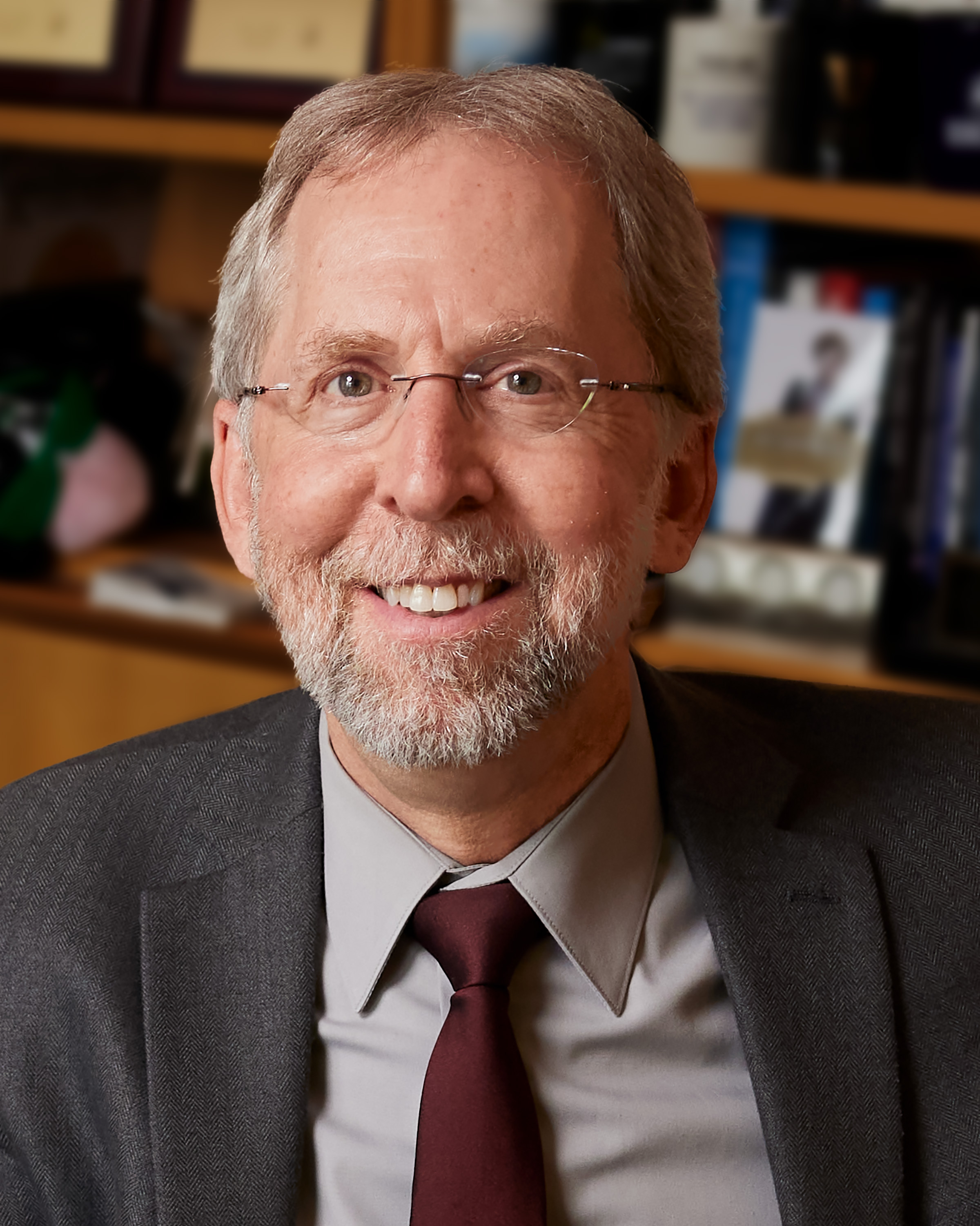
Dr. Eric Green is a genomics researcher, Human Genome Project participant, and
former Director of the National Human Genome Research Institute (NHGRI) at the U.S. National Institutes of Health (NIH). He was the third NHGRI Director, having been appointed by NIH Director Dr. Francis Collins in 2009. He served as NHGRI Director from 2009 to 2025.
Dr. Green was at NHGRI for over 30 years, during which he was appointed to multiple key leadership roles prior to becoming the Director. He served as the Institute?s Scientific Director for 7 years, Chief of the Genome Technology Branch for 13 years, and Founding Director of the NIH Intramural Sequencing Center for 12 years.
For just over two decades, Dr. Green directed an independent research program that included integral start-to-finish roles in the Human Genome Project and groundbreaking work on mapping, sequencing, and characterizing mammalian genomes.
Dr. Green earned his M.D. and Ph.D. degrees in 1987 from Washington University in St. Louis; coincidentally, the word ?genomics? was coined in that same year. Throughout his career, he has authored and co-authored over 395 scientific publications. Dr. Green has earned multiple honors and awards, including election to the National Academy of Medicine in 2023.
Eric Green gave a talk entitled From the Human Genome Project to the Realization of Genomic Medicine: Highlights from a ~35-Year Journey.
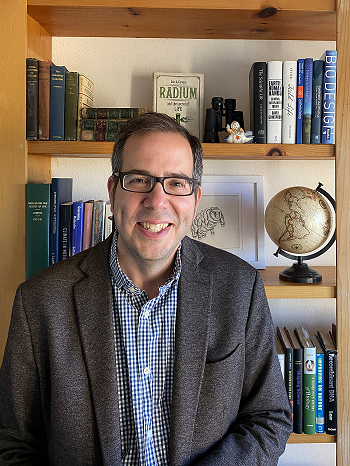
Luis Campos is the Baker College Chair for the History of Science, Technology, and Innovation at Rice University. He recently co-organized "The Spirit of Asilomar and the Future of Biotechnology," an international summit held in Pacific Grove, California, on the fiftieth anniversary of the landmark Asilomar conference on recombinant DNA. Campos has written widely on the history of biology and is the author of Radium and the Secret of Life (2015) and co-editor of Making Mutations: Objects, Practices, Contexts (2009), and Nature Remade: Engineering Life, Envisioning Worlds (2021).
Campos served as the fourth Baruch S. Blumberg/NASA Chair of Astrobiology at the Library of Congress (2016-2017), and has been in residence at the Institute for Advanced Study (Princeton), Columbia University (New York), Fondation Brocher (Geneva), Akademie Schloss Solitude (Stuttgart), and Ginkgo Bioworks (Boston). He is an associate editor of the Journal of the History of Biology, and recently completed six years serving as Secretary of the History of Science Society, "the world?s largest society dedicated to understanding science, technology, and medicine, and their interactions with society in their historical context.
Luis Campos gave a talk entitled The Best that Biochemistry and Starshine Can Do: Chance, Necessity, and Urgency.
PSB 2026 gratefully acknowledges the support of the following sponsors for their support of PSB 2026.
*Funding for this conference was made possible (in part) by Grant # R13LM006766 from the National Library of Medicine. The views expressed in written conference materials or publications, and by speakers and moderators, does not necessarily reflect the official policies of the Department of Health and Human Services; nor does mention by trade names, commercial practices, or organizations imply endorsement by the U.S. Government.
** Funding for this conference was made possible (in part) by Grant # 2531429 from the U.S. National Science Foundation. The views expressed in written conference materials or publications, and by speakers and moderators, does not necessarily reflect the official policies of the U.S. National Science Foundation; nor does mention by trade names, commercial practices, or organizations imply endorsement by the U.S. Government.
If you or your organization would like to be a sponsor of PSB, please email the PSB Coordinator at psb.hawaii @ gmail.com.
Information about previous PSB meetings, including the full electronic proceedings, is available.
Tiffany Murray
PSB Coordinator
Department of Bioengineering
443 Via Ortega Room 213
Stanford, CA, USA 94305
Telephone: (650) 725-0659
Email: psb.hawaii @ gmail.com
This page is no longer being updated. Last update: January 26, 2026.