PSB 2026 Keynotes

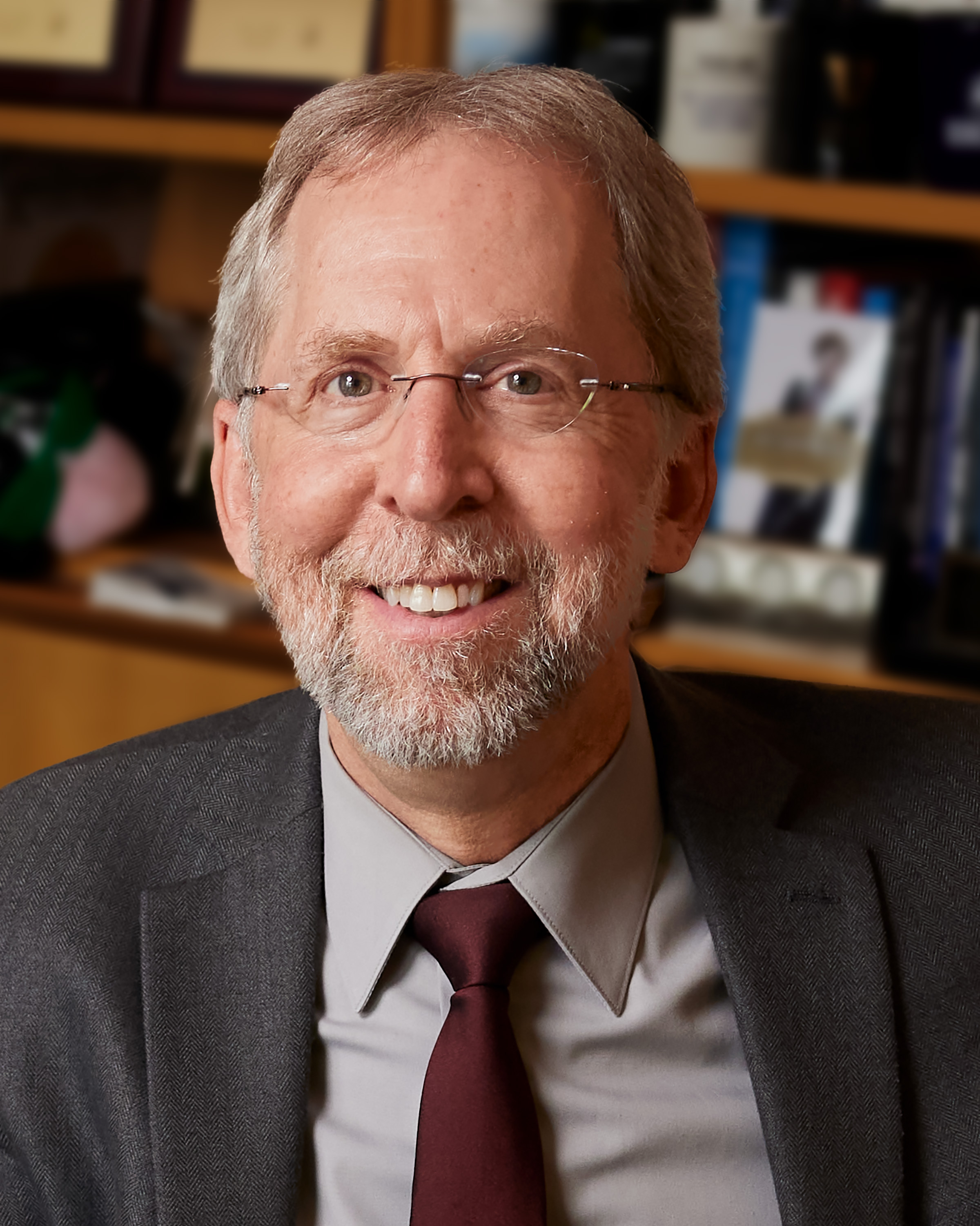
- Former Director
- National Human Genome Research Institute (NHGRI) at the U.S. National Institutes of Health (NIH)
The coming decade offers great promise for human genomics and genomic medicine. Since the completion of the Human Genome Project over two decades ago, genomics has become progressively entrenched within the bedrock of the biomedical research enterprise. Capitalizing on the momentum of the project’s successful completion, the field of genomics has increasingly expanded and matured, such that genomics is now central and catalytic in basic and translational research, and studies now regularly demonstrate the vital role that genomic information can play in clinical care. Looking ahead, the anticipated advances in technologies, biological insights, and clinical applications (among others) will lead to more widespread dissemination of genomics throughout biomedical research, a growing adoption of genomics into medical and public health practices, and an increasing relevance of genomics in everyday life. At the same time, many challenges remain and require ongoing attention, such as understanding the biological complexities of the human genome, untangling the complex roles that genomic variants play in health and disease, and ensuring that genomics gets broadly and equitably integrated in medicine.
Dr. Eric Green is a genomics researcher, Human Genome Project participant, and
former Director of the National Human Genome Research Institute (NHGRI) at the U.S. National Institutes of Health (NIH). He was the third NHGRI Director, having been appointed by NIH Director Dr. Francis Collins in 2009. He served as NHGRI Director from 2009 to 2025.
Dr. Green was at NHGRI for over 30 years, during which he was appointed to multiple key leadership roles prior to becoming the Director. He served as the Institute’s Scientific Director for 7 years, Chief of the Genome Technology Branch for 13 years, and Founding Director of the NIH Intramural Sequencing Center for 12 years.
For just over two decades, Dr. Green directed an independent research program that included integral start-to-finish roles in the Human Genome Project and groundbreaking work on mapping, sequencing, and characterizing mammalian genomes.
Dr. Green earned his M.D. and Ph.D. degrees in 1987 from Washington University in St. Louis; coincidentally, the word “genomics” was coined in that same year. Throughout his career, he has authored and co-authored over 395 scientific publications. Dr. Green has earned multiple honors and awards, including election to the National Academy of Medicine in 2023.
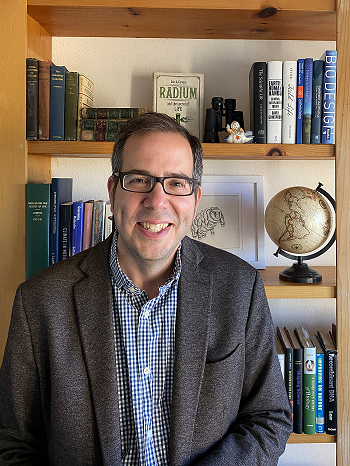
- Baker College Chair for the History of Science, Technology, and Innovation
- Rice University
Biology has always been becoming plural. From the earliest searches for the primordial forms of life in the ocean depths, to efforts to master mutation and control the gene, to the unfathomed multitudes of life forms anticipated in the "star-bespattered abysses of the cosmos,” biologists have long sought not only to understand the limits of extant life but to envision and engineer life "as it could be." Today, as we have begun to algorithmically explore new possibilities for living systems in a combinatorial cosmos vastly larger than astronomical space, we grapple anew with questions of chance and necessity, inflected now with contemporary urgency. In this talk, historian of science Luis Campos will suggest some ways in which our efforts to move from the shores of the known to possible new biologies intersect with the politics of our time, and the sometimes uneasy relations between these two “arts of the possible.” E pluribus novum.
Luis Campos is the Baker College Chair for the History of Science, Technology, and Innovation at Rice University. He recently co-organized "The Spirit of Asilomar and the Future of Biotechnology," an international summit held in Pacific Grove, California, on the fiftieth anniversary of the landmark Asilomar conference on recombinant DNA. Campos has written widely on the history of biology and is the author of Radium and the Secret of Life (2015) and co-editor of Making Mutations: Objects, Practices, Contexts (2009), and Nature Remade: Engineering Life, Envisioning Worlds (2021).
Campos served as the fourth Baruch S. Blumberg/NASA Chair of Astrobiology at the Library of Congress (2016-2017), and has been in residence at the Institute for Advanced Study (Princeton), Columbia University (New York), Fondation Brocher (Geneva), Akademie Schloss Solitude (Stuttgart), and Ginkgo Bioworks (Boston). He is an associate editor of the Journal of the History of Biology, and recently completed six years serving as Secretary of the History of Science Society, "the world’s largest society dedicated to understanding science, technology, and medicine, and their interactions with society in their historical context.